Private game reserve · Yzerfontein · Western Cape
West Coast Private Game Reserve
West Coast Private Game Reserve is a 1700 ha privately funded game reserve on the West Coast of South Africa, just outside Yzerfontein and 1 hour’s drive north of Cape Town. It was established in 2024 when three neighbouring farms joined together to create a conservation buffer zone between West Coast National Park and Yzerfontein. Giraffe, Cape buffalo, zebra, eland, blue wildebeest and seven more antelope species roam free across dune strandveld, sand fynbos, natural salt pans and springs, and from August to October the reserve is part of the West Coast flower season.
The reserve at a glance
- Size
- 1700 ha
- Location
- Outside Yzerfontein on the West Coast, Western Cape, South Africa. Borders West Coast National Park.
- From Cape Town
- 1 hour north on the R27
- Established
- 2024, by three neighbouring farms; fences opened in November 2024
- Habitat
- Strandveld on the dunes, sand fynbos on the flats, salt pans, three natural springs and a seasonal stream
- Wildlife
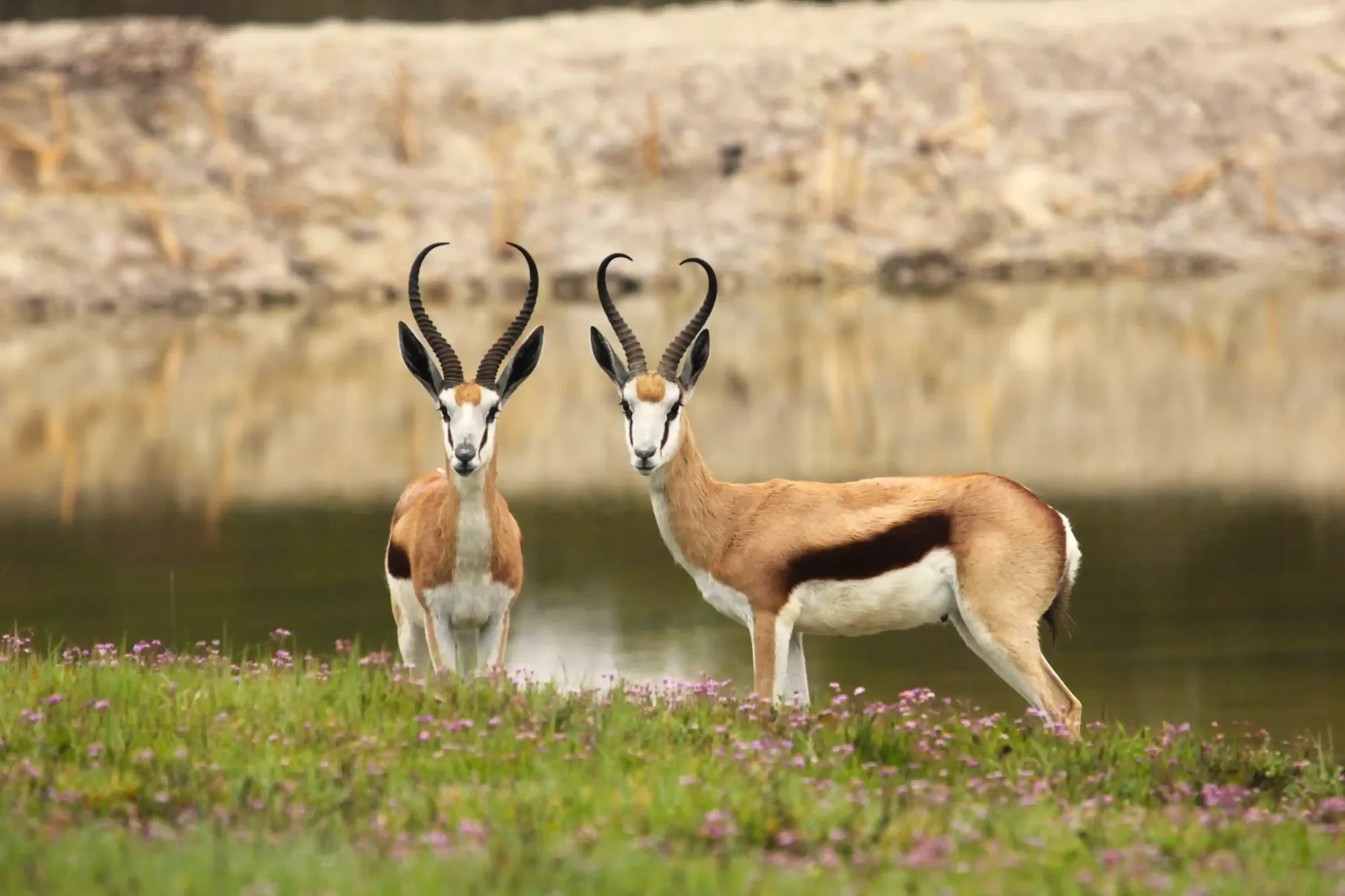
- Giraffe, Cape buffalo, zebra, eland, blue wildebeest, red hartebeest, waterbuck, springbok, steenbok, duiker, grysbok, ostrich and more
- Flower season
- August to October, depending on winter rain
- Visiting
- Guided game drives and horse rides only: no self-drive and no walking on your own
- Funding
- Privately funded through guest and visitor revenue
- GPS
- -33.312744, 18.193983 (M5PV+RJ Yzerfontein)
History
A reserve made from three farms
West Coast Private Game Reserve was established in 2024 by three like-minded neighbouring farms, to create a conservation buffer zone between West Coast National Park and Yzerfontein.
Two of the farms had been used for free-range cattle, which left most of their land as undisturbed natural veld. The third, Blombosch, was already a game farm with giraffe, zebra, waterbuck, ostrich and eland. In 2024 blue wildebeest, red hartebeest and springbok were released, and in November 2024 the fences between the farms were opened, creating one reserve. The smaller wildlife, such as steenbok, duiker, grysbok, porcupine and caracal, was always naturally present on all three farms.
On 18 September 2025 a breeding herd of 11 Cape buffalo, 10 young cows and one bull, was released onto the reserve after a month of settling in a boma. Buffalo once roamed the Western Cape but disappeared from the region with farming and settlement; the herd is the start of their return to the West Coast. Read about the release.

The land tells a story
Landscape and habitats
The reserve has two main vegetation types, each with its own vegetation zones and the wildlife that favours them. Strandveld covers the dunes closer to the sea: Langebaan Dune Strandveld nearest the beach, turning into Saldanha Flats Strandveld. Sand Fynbos, here Hopefield Sand Fynbos, covers the flatter ground further from the ocean, with pincushions and proteas marking the change. The Sand Fynbos is the main draw in the flower season.
The salt pans and The Salt Mine
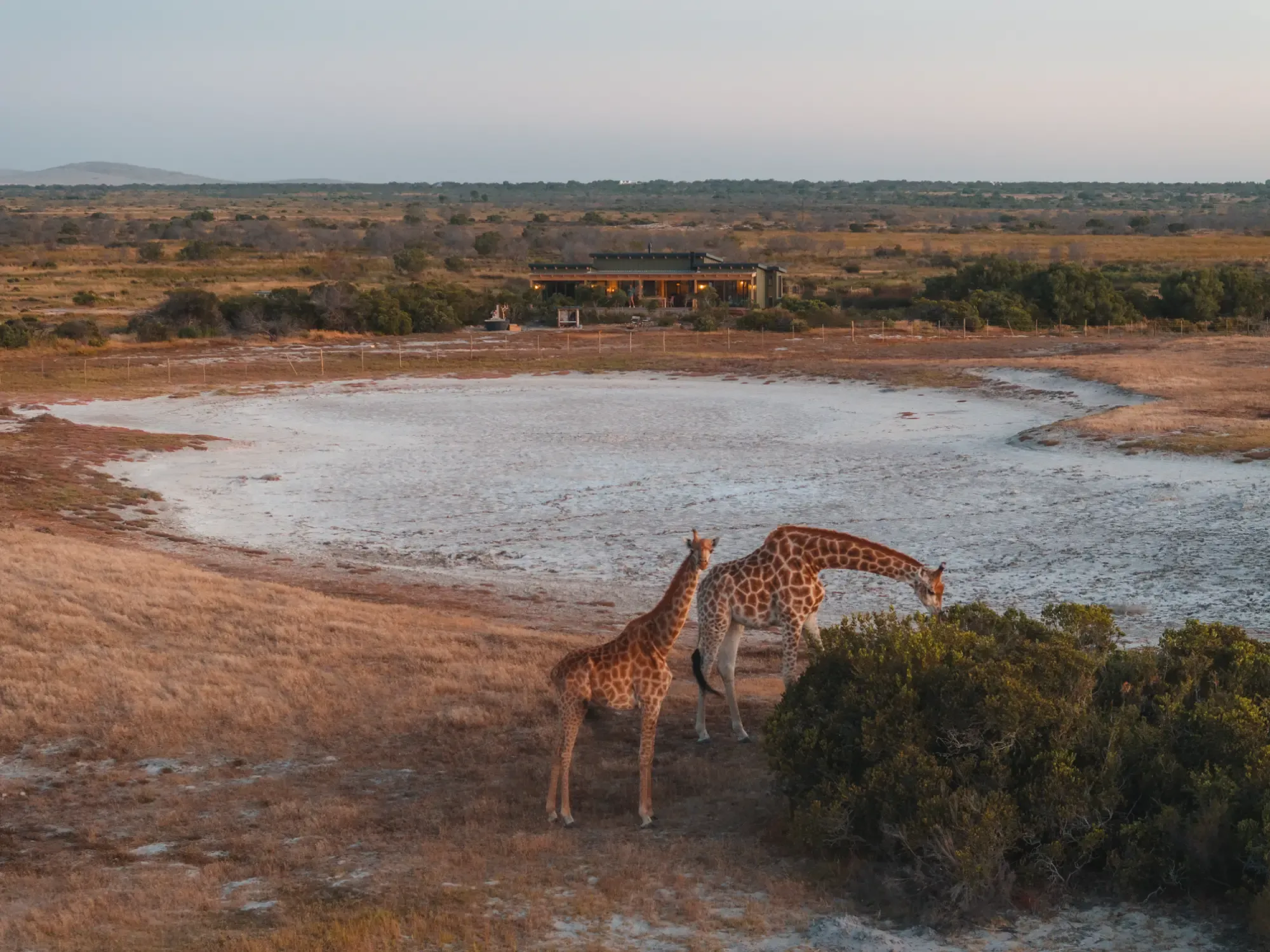
The area is known for its large natural salt pans, which have a high natural gypsum content. Some were mined in the past for gypsum or salt, and that gypsum is behind the whitewashed gypsum houses so typical of the West Coast. It also gave its name to The Salt Mine, the two private houses beside the pans. The pans give the animals shelter, water and salt licks, and draw wildlife especially in the early morning and late afternoon. After rain they form seasonal wetlands that attract a wide variety of birds.
Springs and a seasonal stream
Three natural springs and a seasonal river give a varied landscape with pockets of habitat for smaller species such as steenbok, duiker and grysbok. Blue wildebeest, which need water every day, are usually found near a spring or waterhole.
Roaming free
Wildlife
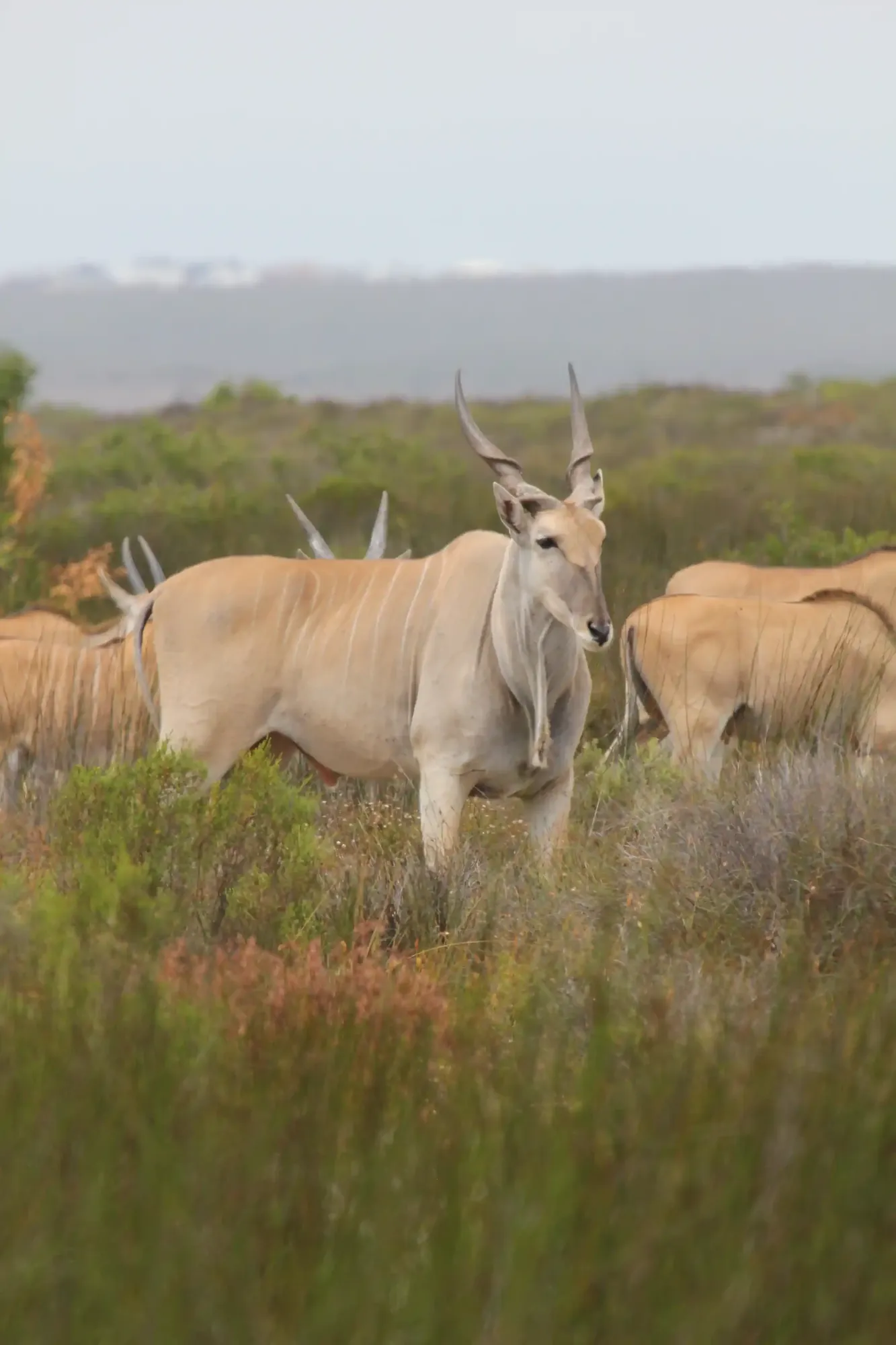
The reserve’s wildlife belongs to the West Coast habitat. This is not the Kruger: sightings are fewer, but they are a genuine reflection of the wild West Coast. The reserve is home to eight antelope species, from the largest, the eland, to the elusive steenbok. With their heads sticking out above the dunes, giraffe are easy to spot in this landscape.
Seen often
On the reserve, but rarely seen
Birds
Bringing the colour
The West Coast flower season
The West Coast is famous for its wildflowers in late winter and spring. From August to October the reserve’s Sand Fynbos and Strandveld flower, and a game drive or horse ride takes you through them. How early the flowers come, and how many and how varied they are, depends on the winter rain: a wet winter means a bigger show.
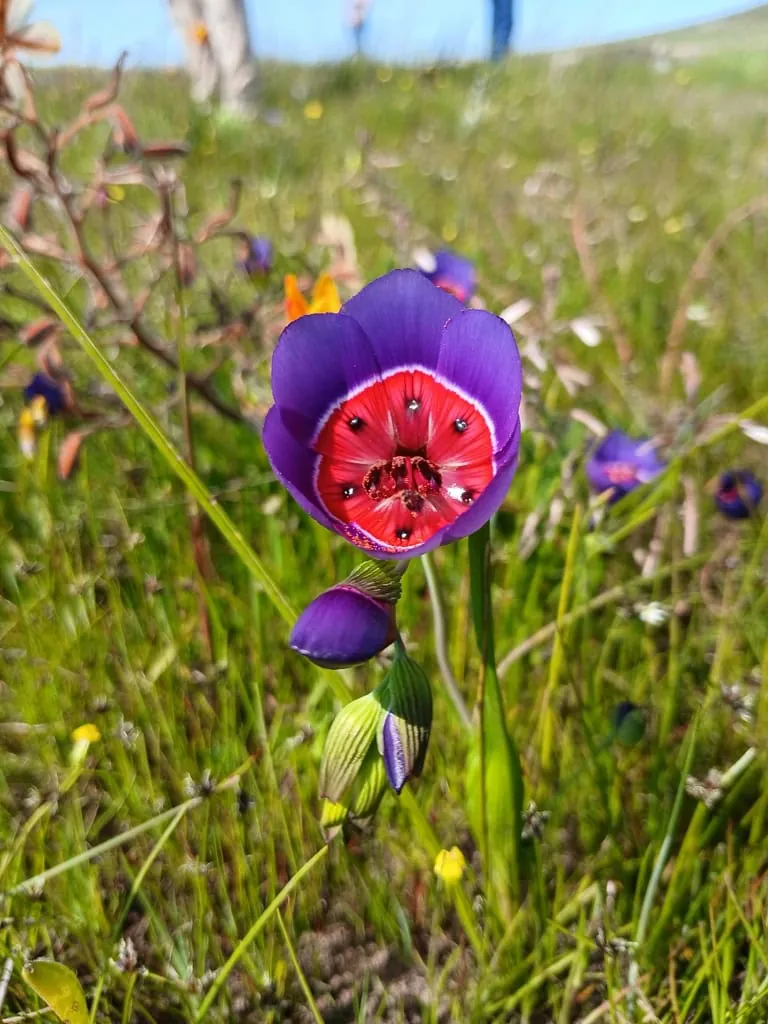
White ring wine cup 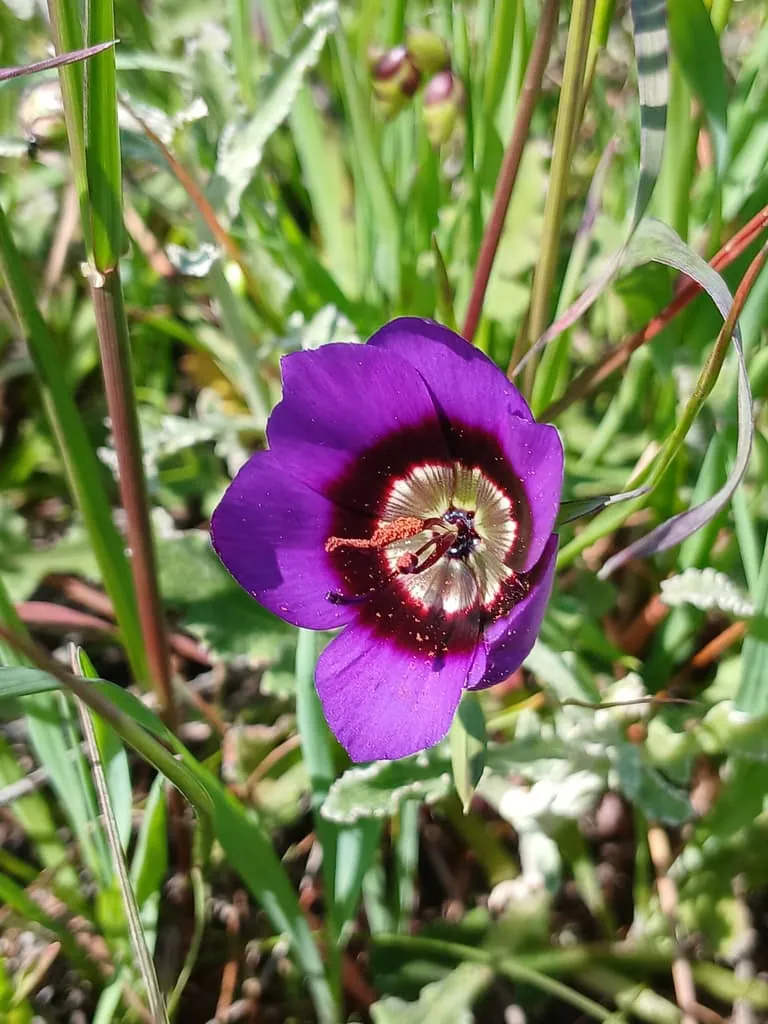
White winecup 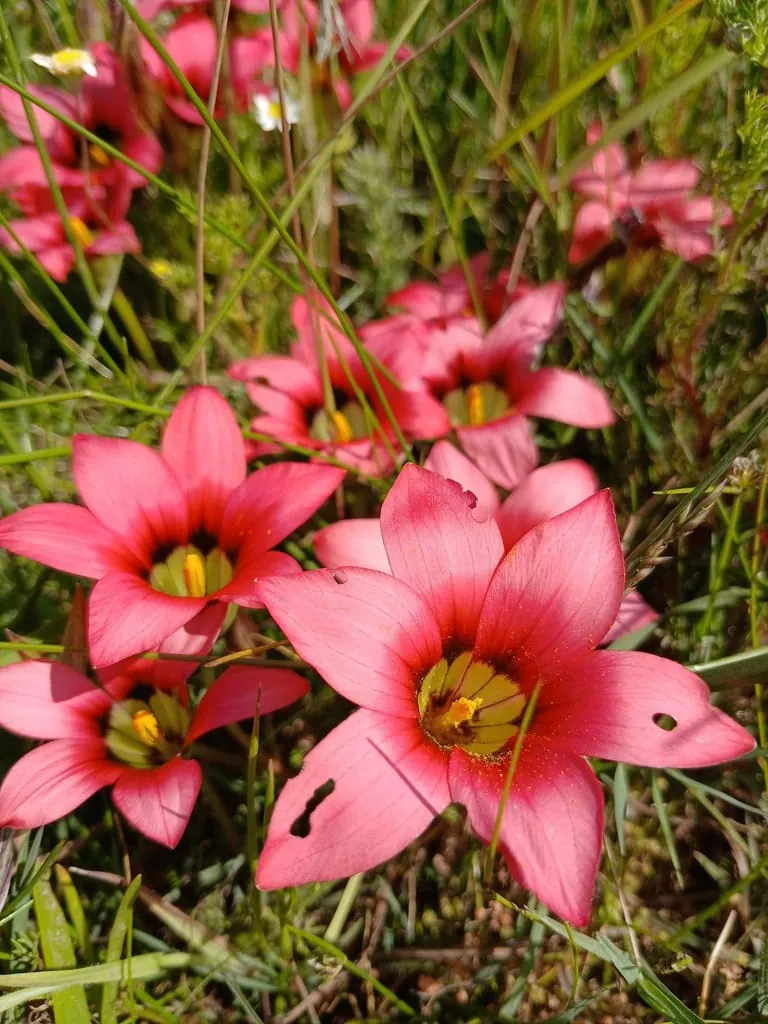
Shaggy froetang 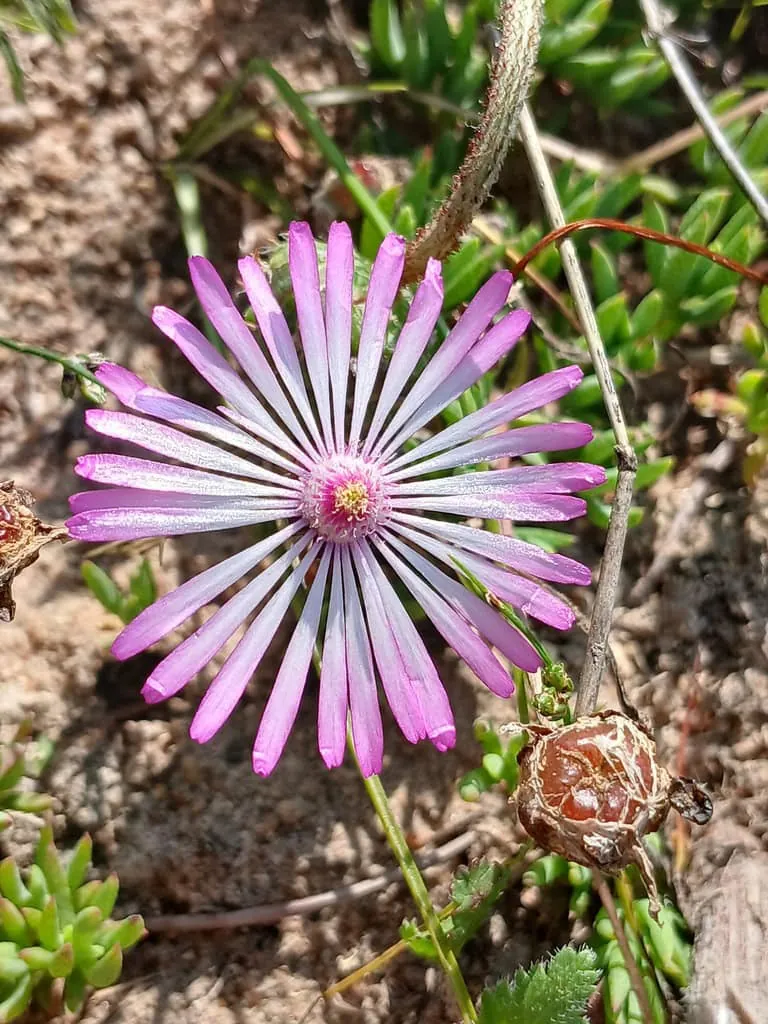
Lampranthus peacockiae 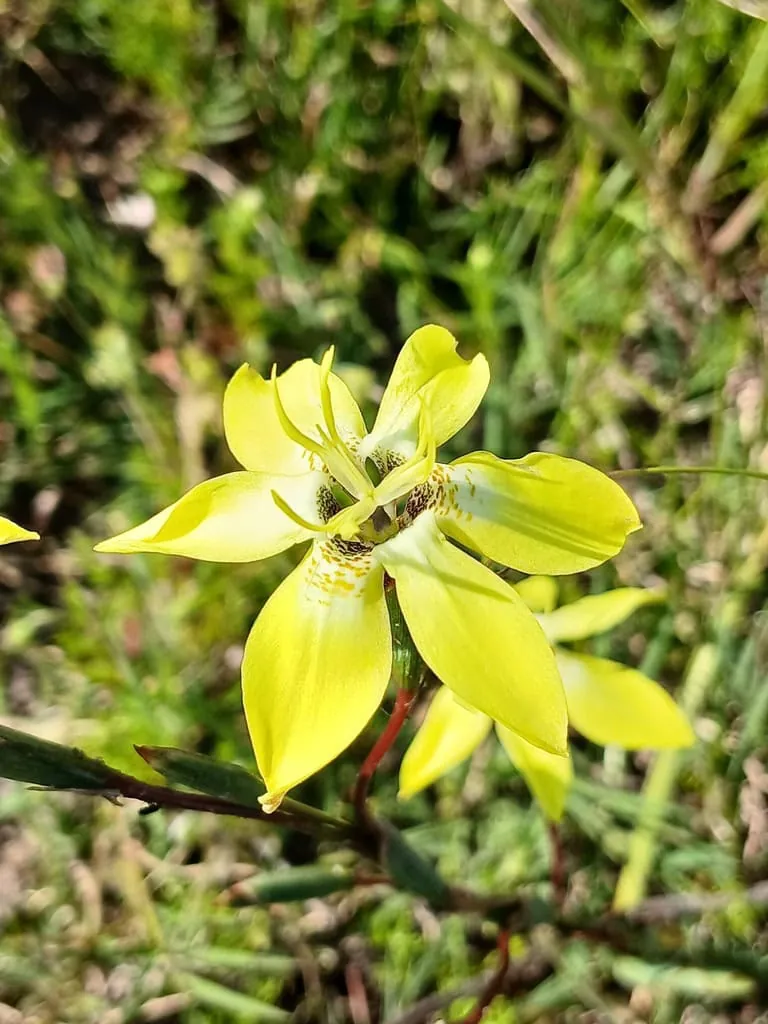
Tar tulp 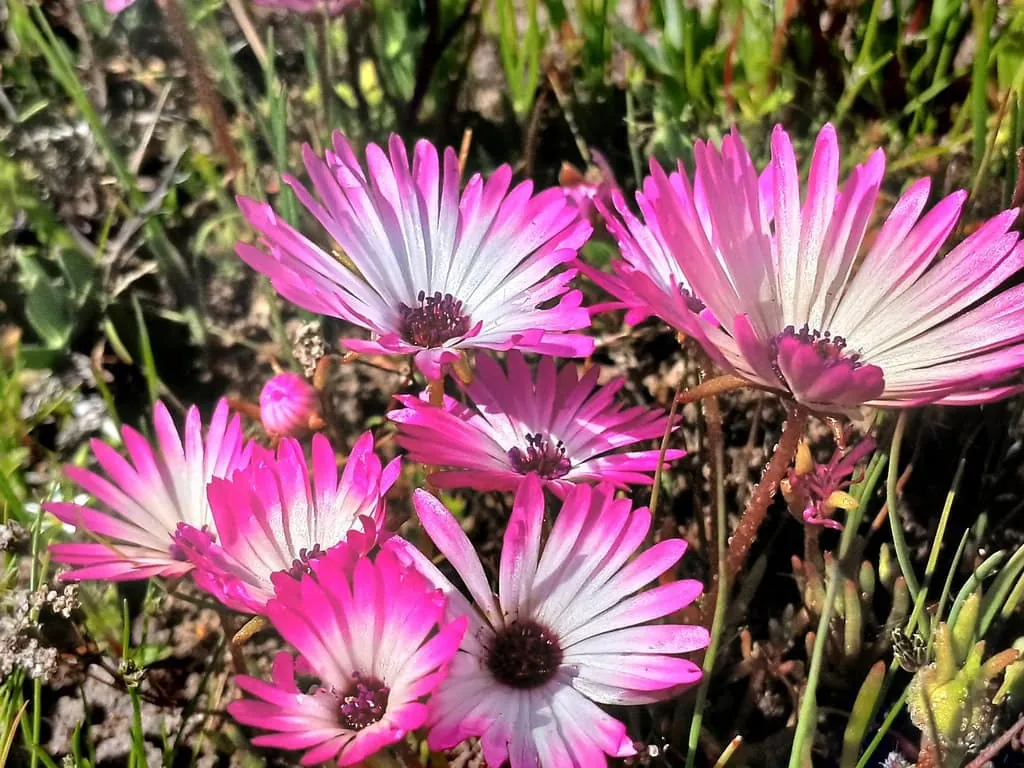
Livingstone daisies 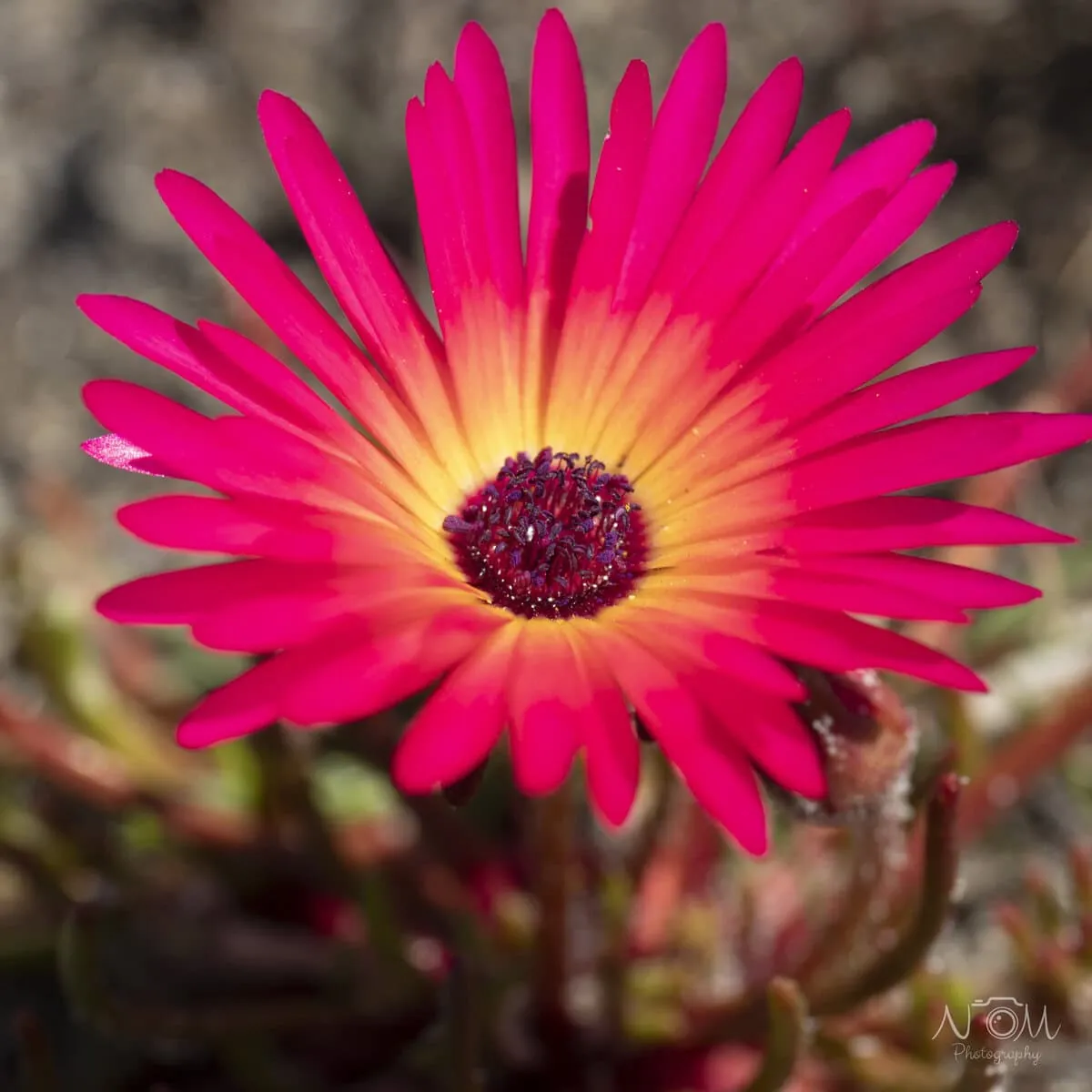
A magenta vygie 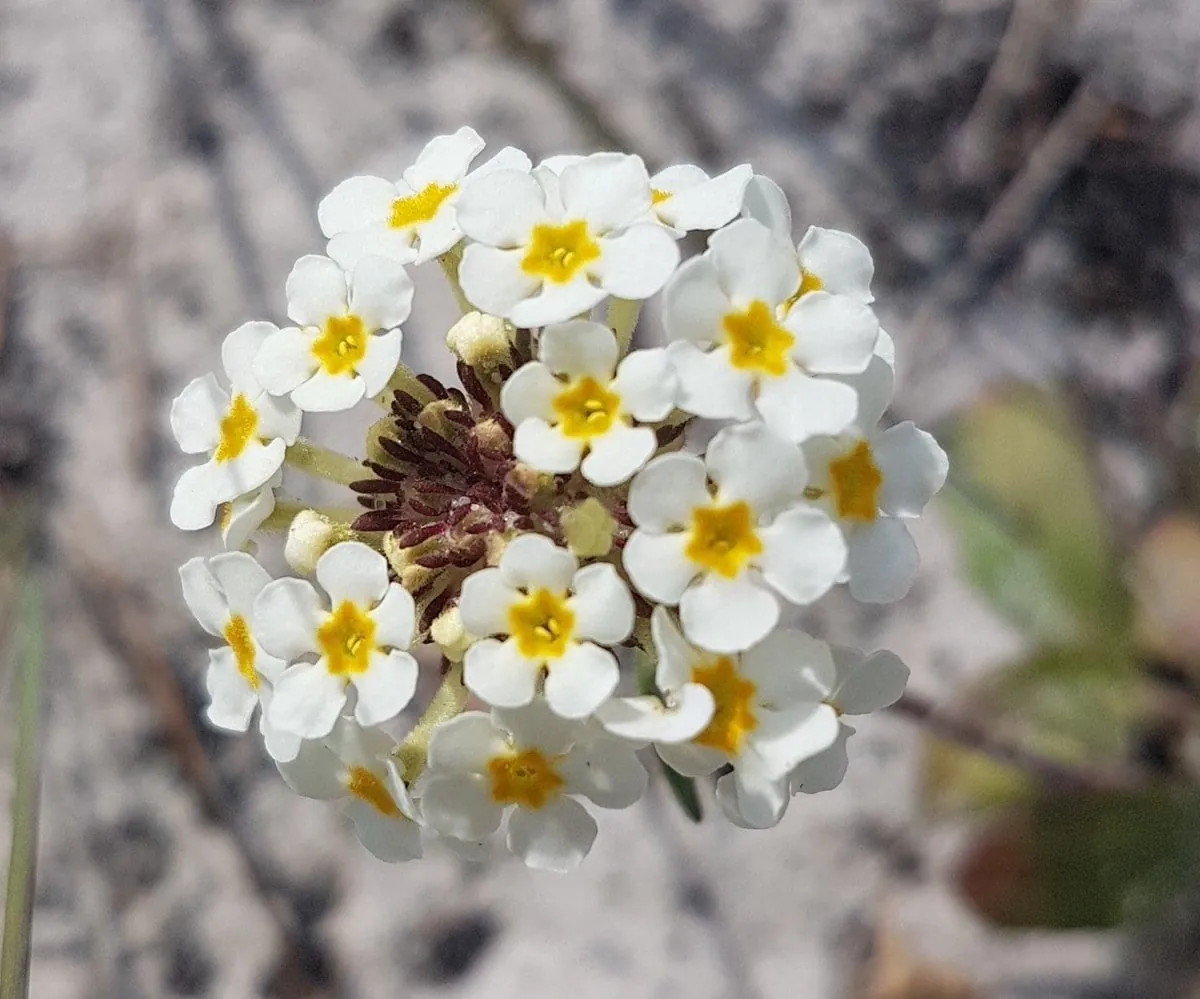
A cluster of small white strandveld flowers 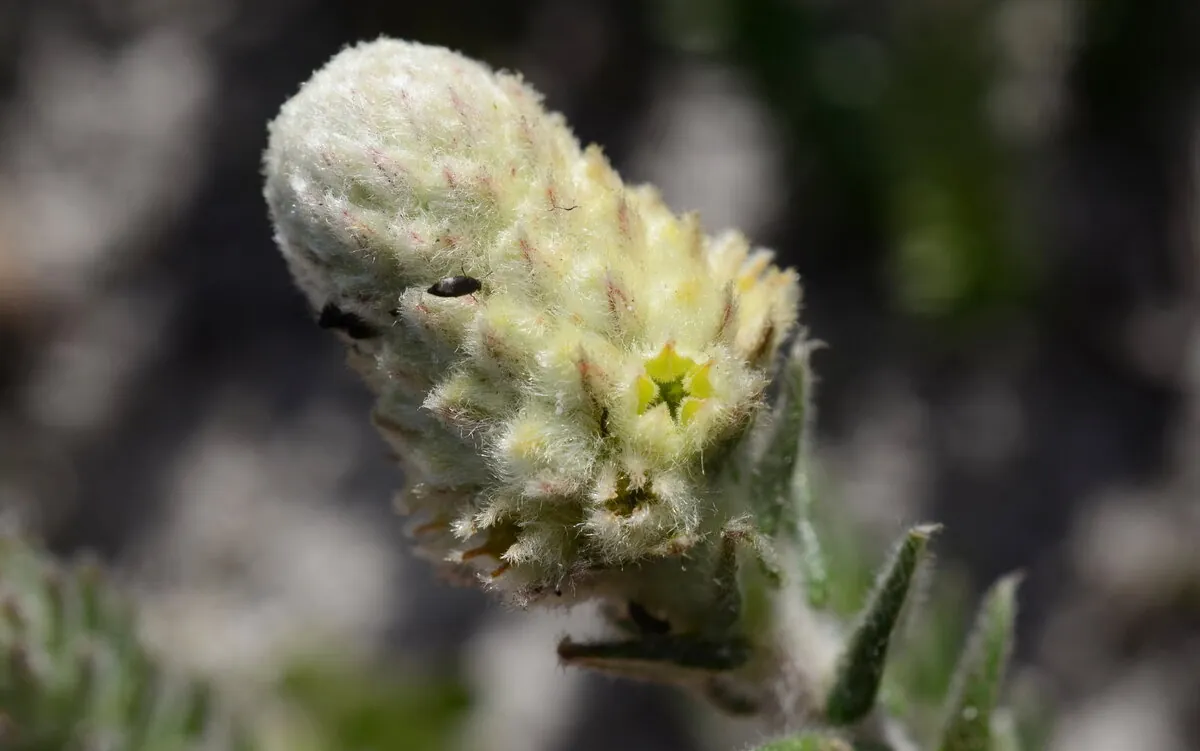
A silvery fynbos bud
Conservation
Keeping the land natural
Fighting invasive trees
As in all natural areas along the West Coast, invasive alien trees are the reserve’s main conservation challenge. Rooikrans (Acacia cyclops) and Port Jackson (Acacia saligna) were brought in from Australia and have taken hold across the Cape. Both grow fast on very little and shade out the threatened fynbos. Both are legumes, which add nitrogen to the soil, and fynbos plants are sensitive to it. Their seeds survive fire and stay in the soil for up to 50 years, so they are almost impossible to eradicate.
Nature is fighting back. Port Jackson is attacked by the gall rust fungus, and the bulky galls it causes are often seen on game drives. Rooikrans seed production is reduced by the gall midge and a seed-eating weevil.
How the reserve manages them
Browsers such as giraffe and eland, kept at a higher density, hold back new Port Jackson and Rooikrans growth. An ongoing wood-cutting operation cuts back the mature trees. Guests staying on the reserve can help by buying this wood from their hosts for the fireplaces, braais and hot tubs, which pays for the cutting.
Funded by its visitors
West Coast Private Game Reserve is fully privately funded. Its conservation work is paid for by the guests and visitors who come on game drives, ride and stay on the reserve, so every visit helps keep the land natural and maintain the buffer zone around the national park.
Activities
Things to do on the reserve
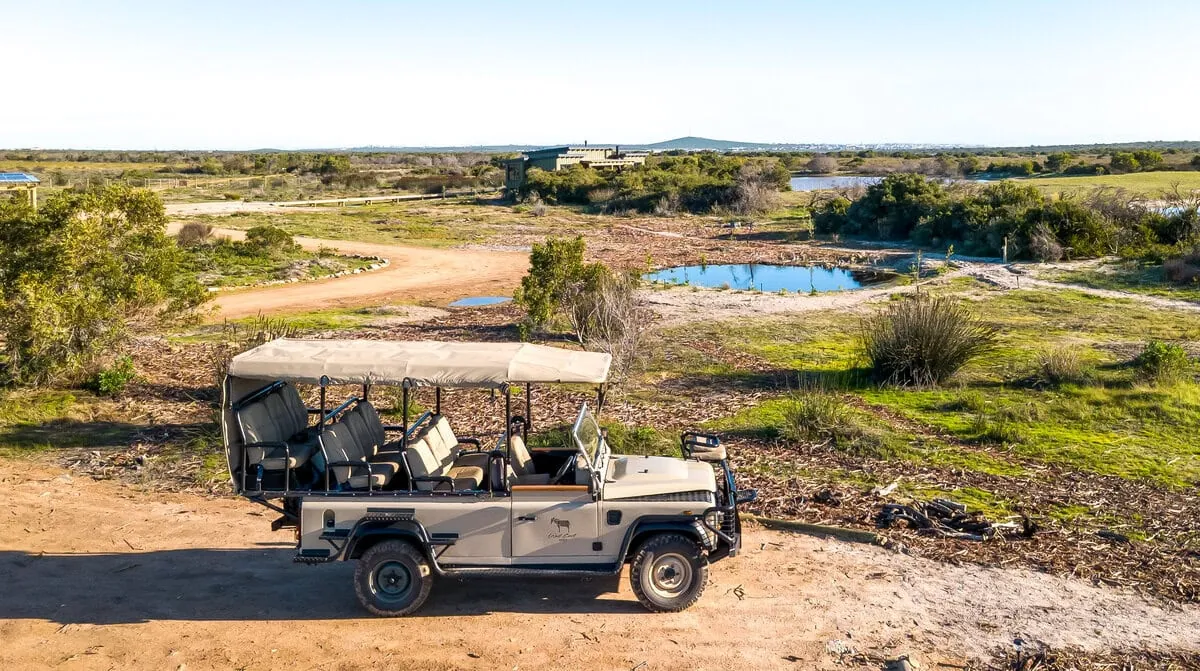
West Coast Safaris is the reserve’s only game drive operator, for day visitors and for guests staying on the reserve. There are no self-drive safaris and no walking on your own, because the reserve has dangerous wildlife, including Cape buffalo: you see it on a guided game drive or a guided horse ride.
- West Coast Safari
- Safari game drives on the West Coast Private Game Reserve, in 9-seater open Land Rovers with qualified guides, starting and finishing at the Weskus Padstal. From R850 per person.
- Safari from Cape Town
- Cape to Coast: a safari day trip including transfers to and from Cape Town, with time for a lunch in Yzerfontein and a walk on the beach. From R1,850 per person.
- Horseback Safaris
- Discover the reserve on horseback. Rides on the reserve for competent riders, beach rides for riders of any ability, with West Coast Horse Trails. From R1,250 per person.
- Safari & San Heritage Experience
- Full day trip from Cape Town: a morning safari on the reserve, then lunch and guided tours at the !Khwa ttu San Heritage Centre. From R2,750 per person.
Accommodation
Where to stay on and near the reserve
On the reserve
- Rooikat Safari Collection
- Porcupine House (max 4 guests), Caracal House (max 4 guests)
- Blombosch
- Hide-Away Lodge (max 33 guests), Jaghuisie (max 4 guests), Lumberjack Cottage (max 4 guests), Fisherman Cottages (max 2 guests)
- Little Acre Safari Pods
- Little Acre Safari Pods (2 guests per pod)
Near the reserve
- Rooikat Safari Collection
- The Mermaid’s Purse (max 12 guests)
Every place is self-catering and booked directly with its operator: see accommodation for details and booking links.
Who runs the reserve
West Coast Private Game Reserve is owned collectively by the three neighbouring farms that formed it in 2024. Independent operators run what guests do and where they stay.
- West Coast Safaris
- All game drives on the reserve, for day visitors and guests staying over. The reserve's only game drive operator. More
- West Coast Horse Trails
- Horse rides on the reserve and on 16 Mile Beach, from their stables just outside the reserve. More
- Rooikat Safari Collection
- The Salt Mine (Porcupine House and Caracal House) on the reserve, and The Mermaid's Purse on the beach in Yzerfontein. More
- Blombosch
- Hide-Away Lodge, Jaghuisie, Lumberjack Cottage and the Fisherman Cottages. More
- Little Acre Safari Pods
- Three safari pods for two, overlooking the salt pans. More
Getting there
- From Cape Town
- Take the R27 north for 1 hour to the R315 turn-off to Yzerfontein.
- Game drives
- Start and finish at the Weskus Padstal (West Coast Farmstall), on the corner of the R27 and the R315. Arrive half an hour early.
- Accommodation
- From the R27 take the R315 towards Yzerfontein, then turn right at the West Coast Private Game Reserve sign, about halfway to Yzerfontein, and follow the signs.
- Horse rides
- Start at the West Coast Horse Trails stables just outside the reserve; they send directions with your booking.
- GPS
- -33.312744, 18.193983, M5PV+RJ Yzerfontein, the reserve’s pin on Google Maps.
- No car?
- Book a Safari from Cape Town with transfers, or Marine Taxis from Yzerfontein.
Questions and answers
Questions about the reserve
Where is West Coast Private Game Reserve?
Just outside Yzerfontein on the West Coast of South Africa, in the Western Cape. It borders West Coast National Park, and its GPS position is -33.312744, 18.193983 (Google plus code M5PV+RJ Yzerfontein).
How far is it from Cape Town?
1 hour’s drive north on the R27. That makes it one of the closest places to Cape Town to go on safari.
How big is the reserve?
1700 ha (hectares).
Is it part of West Coast National Park?
No. It is a separate private reserve that borders the national park, created in 2024 from three neighbouring farms as a conservation buffer zone between the park and Yzerfontein. The two go well together: a guided game drive on the reserve for giraffe, buffalo, zebra and eland, then the national park for its landscapes, the Langebaan Lagoon and the spring flowers.
What animals can I see?
Giraffe, Cape buffalo, eland, zebra, blue wildebeest, red hartebeest, waterbuck, springbok, steenbok, duiker, ostrich, angulate tortoise and Cape scrub hare are seen often. Porcupine, caracal, Cape genet, honey badger and grysbok live on the reserve but are rarely seen, and leopard is a rare and elusive visitor. Birds include flamingos (occasional guests), pelicans around the salt pans, the Cape eagle-owl, Cape spurfowl, guineafowl and many more.
Are there buffalo on the reserve?
Yes. A breeding herd of 11 Cape buffalo, 10 young cows and a bull, was released on 18 September 2025.
Can I drive or walk around the reserve on my own?
No. There are no self-drive safaris and no walking on your own, because the reserve has dangerous wildlife, including Cape buffalo. You see the reserve on a guided game drive with West Coast Safaris or a guided horse ride with West Coast Horse Trails.
How do I visit the reserve for the day?
Book a game drive with West Coast Safaris (morning or afternoon, from the Weskus Padstal), a Safari from Cape Town day trip with transfers, or a horse ride with West Coast Horse Trails.
How long is a game drive, and what does it cost?
2.5 to 3 hours, at 9 am or 2 pm, in a 9-seater open Land Rover with a qualified guide, including a coffee and tea stop. Adults from R850, children 3 to 11 R350, or R4,500 for a private vehicle.
Can children come on a game drive?
Yes. Children 3 to 11 pay the child rate. Children under 3 are welcome on private vehicle bookings.
Can I stay overnight on the reserve?
Yes, in private self-catering accommodation: The Salt Mine’s Porcupine House and Caracal House (Rooikat Safari Collection) beside the salt pans, the Blombosch cottages and Hide-Away Lodge, or the Little Acre Safari Pods. The Mermaid’s Purse, Rooikat’s beach villa in Yzerfontein, is nearby. See where to stay.
Who owns and runs the reserve?
The reserve is owned collectively by the neighbouring farms that formed it in 2024. Independent operators run what guests do and where they stay: West Coast Safaris (all game drives), West Coast Horse Trails (horse rides), Rooikat Safari Collection, Blombosch and Little Acre Safari Pods (accommodation).
When is the flower season?
August to October. How early it starts and how many flowers there are depend on how much rain falls in winter.
Can I go on a horseback safari?
Yes, with West Coast Horse Trails. Rides on the reserve are for competent riders who can control a horse at a canter and gallop, because of the buffalo; beach rides suit any ability. See Horseback Safaris.
How is the reserve funded?
Entirely privately, through the guests and visitors who come on its game drives and rides and stay on it. Their visits pay for its conservation work.
Planning a trip? Combining a safari with the beach, a sea safari, !Khwa ttu or the flowers, and how the reserve compares with other safaris near Cape Town: see Safari near Cape Town: questions and answers.
Get in touch to book or ask any question.
Call or WhatsApp 066 525 1994, email info@westcoastsafaris.co.za, or visit the booking office at the Weskus Padstal.